Central US Braces for Chilly December 7th: Snow Chances & Frigid Temps Ahead
Central US Braces for Chilly December 7th: Snow Chances & Frigid Temps Ahead
As we head into the second week of December 2025, a significant cold air mass has settled across the vast expanse of the Central United States. From the Rocky Mountains to the Great Lakes and down into the Ohio Valley, residents are advised to prepare for a day marked by frigid temperatures, varying cloud cover, and the increasing potential for winter precipitation. This comprehensive forecast will guide you through what to expect on December 7th, offering crucial insights for travel, agriculture, and personal safety.
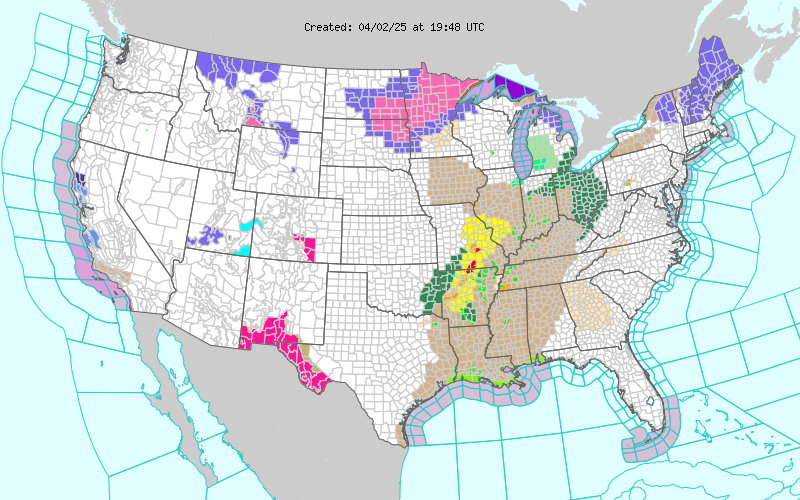
The image is a live image for the National Weather Service server. It gets updated on Real time.
Current Conditions Across the Central Zone
The morning of December 7th reveals a stark contrast in conditions across the heartland. In the western reaches of the Central Zone, cities like Denver, CO, and Colorado Springs, CO, are waking up to crisp, sunny skies, with temperatures around 35°F and 33°F respectively. While bright, the air remains undeniably cold, a clear indicator of the extensive chill dominating the region.
Moving eastward into the Upper Midwest, the mercury plummets dramatically. Fargo, ND, is experiencing an exceptionally bitter start at -6°F, with light winds making the air feel even colder. Nearby, Minneapolis, MN, registers a frosty 4°F under mostly sunny skies, while Sioux Falls, SD, is at 7°F with mostly cloudy conditions. These northern outposts are truly feeling the brunt of winter's early grip.
Further south in the Central Plains, temperatures are more moderate but still well below freezing. Omaha, NE, and Des Moines, IA, are seeing temperatures in the teens (19°F and 16°F respectively) with mostly cloudy to mostly sunny skies. Kansas City, MO, is at 30°F, while Wichita, KS, is slightly warmer at 31°F, both under mostly cloudy skies, hinting at the potential for later precipitation.
Towards the eastern edge of the Central Zone, encompassing parts of the Great Lakes and Ohio Valley, conditions are generally cloudy and a bit milder, though still cold. Milwaukee, WI, is at 22°F with partly sunny skies, but notably higher winds at 15 mph. Chicago, IL, is at 32°F with a chance of snow and similar strong winds. Detroit, MI, is at 30°F with a chance of light snow. Further south, Indianapolis, IN, is experiencing patchy drizzle at 36°F, and Louisville, KY, is at 38°F with mostly cloudy skies, representing the warmest pocket within this widespread cold front. St. Louis, MO, sits at 39°F, also mostly cloudy.
Detailed City-by-City Forecast: Navigating the Day and Night
Understanding the nuances of the forecast for your specific location is key to a smooth December 7th. Here's a closer look at what various cities can expect as the day progresses into night:
- Denver, CO: Enjoy a mostly sunny day with a high of 35°F and light winds around 7 mph. As evening approaches (21:00 MST), expect partly cloudy skies and a slight dip to 32°F with continued light breezes at 6 mph. A beautiful, crisp winter day.
- Colorado Springs, CO: Similar to Denver, the day will be sunny with a high of 33°F and gentle 5 mph winds. Nighttime (21:00 MST) brings mostly clear skies and a cooler 28°F, with winds remaining light.
- Fargo, ND: A brutally cold start at -6°F with partly sunny conditions and calm winds. By nightfall (22:00 CST), temperatures will rise slightly to 2°F, but a chance of light snow will develop, accompanied by 9 mph winds. Extreme cold precautions are essential here.
- Minneapolis, MN: A chilly 4°F with mostly sunny skies and light 5 mph winds during the day. The night (22:00 CST) will see temperatures dip to 3°F under cloudy skies, with winds holding steady at 5 mph.
- Sioux Falls, SD: Mostly cloudy with a high of 7°F and 5 mph winds. The evening (22:00 CST) introduces a slight chance of light snow as temperatures climb to 13°F, with winds picking up to 10 mph.
- Omaha, NE: Mostly cloudy at 19°F with 7 mph winds. As night settles (22:00 CST), the chance of snow showers increases, and temperatures will remain around 19°F with lighter 5 mph winds.
- Des Moines, IA: Mostly sunny conditions and 16°F with 12 mph winds during the day. The night (22:00 CST) will become mostly cloudy and significantly colder at 8°F, with winds dropping to 3 mph.
- Kansas City, MO: Expect a cloudy day at 30°F with 10 mph winds. The evening (22:00 CST) will bring mostly cloudy skies and a dip to 23°F, with lighter 5 mph winds.
- Wichita, KS: Mostly cloudy with a high of 31°F and 12 mph winds. The night (22:00 CST) will clear up to mostly clear skies, with temperatures dropping to 27°F and winds calming to 2 mph.
- St. Louis, MO: Mostly cloudy with a high of 39°F and 8 mph winds. The night (22:00 CST) will remain cloudy, with temperatures cooling to 29°F and winds steady at 8 mph.
- Louisville, KY: Mostly cloudy with a high of 38°F and light 3 mph winds during the day. The night (23:00 EST) will stay cloudy, with temperatures holding at 38°F but winds increasing to 8 mph.
- Indianapolis, IN: Patchy drizzle is expected during the day with a high of 36°F and light 3 mph winds. The night (23:00 EST) will be cloudy and colder at 26°F, with winds picking up to 10 mph.
- Chicago, IL: A chance of snow during the day with a high of 32°F and brisk 15 mph winds. The night (22:00 CST) will continue with a chance of snow showers, temperatures at 26°F, and winds remaining strong at 15 mph.
- Milwaukee, WI: Partly sunny with a high of 22°F and strong 15 mph winds. The night (22:00 CST) brings a chance of light snow, with temperatures dropping to 16°F and winds easing to 5 mph.
- Detroit, MI: A chance of light snow during the day with a high of 30°F and 6 mph winds. The night (23:00 EST) will clear to mostly clear skies, with temperatures falling to 20°F and winds at 7 mph.
Winter Weather Outlook: Snowfall Potential and Impacts
While no widespread heavy snow alerts are currently in place, several areas across the Central Zone will experience winter precipitation on December 7th. The Great Lakes region, including Chicago, IL, Milwaukee, WI, and Detroit, MI, has the highest probability of seeing snow, with "Chance Snow" or "Chance Light Snow" in the forecast. Even light accumulations can lead to slick roads and reduced visibility, particularly with the brisk winds expected in Chicago and Milwaukee.
Further west, Omaha, NE, and Sioux Falls, SD, also have a "Chance Snow Showers" or "Slight Chance Light Snow" overnight. Even the extremely cold Fargo, ND, could see a "Chance Light Snow" as temperatures rise slightly above their brutal daytime lows. For residents in these areas, it's crucial to monitor local forecasts for any updates on snow accumulation and potential travel advisories. While significant snowfall isn't anticipated, even a dusting can make untreated surfaces treacherous, especially bridges and overpasses.
The combination of cold temperatures and any form of precipitation means that any moisture on surfaces could quickly freeze, leading to black ice conditions. This is a particular concern during the overnight hours when temperatures are at their lowest and sunlight is absent to help melt any accumulation.
Agricultural Impact: Protecting Livestock and Winter Crops
The widespread cold across the Central Zone has significant implications for the agricultural sector, especially for livestock and any remaining or emerging winter crops. Farmers in the northern plains, particularly around Fargo, ND, Minneapolis, MN, and Sioux Falls, SD, where temperatures are well into the single digits and even below zero, must prioritize the well-being of their animals.
Livestock require extra feed to maintain body heat in such extreme cold. Ensuring access to unfrozen water is also critical, as dehydration can quickly become a problem. Shelter from wind and precipitation is paramount to prevent hypothermia and frostbite. Farmers should be checking on their herds frequently, especially younger or more vulnerable animals.
For winter wheat, which is typically dormant this time of year, the cold is generally manageable if there's sufficient snow cover to insulate the plants. However, in areas with bitter cold and minimal snow, like parts of North Dakota, there's a risk of winterkill if temperatures drop too severely without a protective blanket of snow. The patchy drizzle in Indianapolis or light snow chances elsewhere, if they don't provide significant cover, could still contribute to icy conditions that are not ideal for fields.
Beyond immediate concerns, the prolonged cold can also affect soil conditions, leading to deeper frost penetration. While this can help control some pests, it can also delay spring planting if the thaw is slow. Farmers are advised to keep a close eye on long-range forecasts for any sustained warm-ups or further cold snaps.
Travel Advisories and Road Conditions
Travel across the Central US on December 7th will require caution, particularly in areas expecting precipitation and strong winds. The combination of freezing temperatures and any form of moisture creates hazardous driving conditions. Motorists should be especially vigilant in:
- Great Lakes Region (Chicago, Milwaukee, Detroit): With "Chance Snow" and winds up to 15 mph in Chicago and Milwaukee, visibility could be reduced, and roads may become slick. Allow extra travel time and maintain greater following distances. Check state Department of Transportation (DOT) websites for real-time road conditions.
- Northern Plains (Sioux Falls, Omaha, Fargo): While snow chances are lighter, the extreme cold means any moisture will freeze instantly. Black ice is a significant threat, especially on bridges and overpasses. Winds in Sioux Falls and Des Moines could also cause drifting snow, even with light accumulation.
- Ohio Valley (Indianapolis, Louisville): The "Patchy Drizzle" in Indianapolis, combined with freezing temperatures overnight, could lead to icy patches. Even if temperatures are above freezing during the day, shaded areas or bridges can remain slick.
For air travel, passengers flying into or out of major hubs like Chicago O'Hare (ORD) or Detroit Metro (DTW) should check with their airlines for potential delays or cancellations due to snow or de-icing operations. Even if your departure city is clear, conditions at your destination or connecting airport could be affected.
Always ensure your vehicle is winter-ready: tires properly inflated, adequate tread, full tank of gas, and emergency kit on board. Drive slowly, avoid sudden braking or accelerating, and be aware of your surroundings.
Essential Preparedness Tips for the Cold
With such widespread cold, personal preparedness is paramount for everyone in the Central Zone. Here are essential tips to stay safe and comfortable:
- Dress in Layers: Multiple layers of clothing trap air and provide better insulation than a single heavy garment. Start with a moisture-wicking base layer, add insulating middle layers (fleece, wool), and finish with a waterproof/windproof outer layer. Don't forget hats, gloves, and warm, waterproof footwear.
- Protect Your Home:
- Prevent Burst Pipes: Keep cabinet doors under sinks open to allow warmer air to circulate around pipes. Let a trickle of water run from faucets, especially during the coldest overnight hours, to prevent freezing. Insulate exposed pipes in unheated areas.
- Heating Safety: Ensure your heating system is in good working order. If using space heaters, keep them away from flammable materials and never leave them unattended. Have carbon monoxide detectors in your home.
- Seal Drafts: Check windows and doors for drafts and seal them to keep warm air in and cold air out.
- Vehicle Preparedness:
- Emergency Kit: Stock your car with blankets, extra warm clothes, a shovel, sand or kitty litter for traction, jumper cables, a flashlight with extra batteries, a first-aid kit, and non-perishable food and water.
- Battery Check: Cold weather is hard on car batteries. Get yours tested to ensure it's in good condition.
- Tires: Check tire pressure regularly as it drops in cold weather. Ensure tires have adequate tread for winter conditions.
- Check on Vulnerable Neighbors: Elderly individuals, young children, and those with medical conditions are more susceptible to cold-related illnesses. Take a moment to check on them to ensure they are warm and safe.
- Pet Safety: Bring pets indoors during extreme cold. If they must be outside, ensure they have adequate, insulated shelter and access to unfrozen water.
Historical Context: Winter in the Central US
The Central United States is no stranger to severe winter weather. December often marks the true onset of winter, and while the current forecast for December 7th, 2025, presents a significant cold snap and some snow chances, it falls within the historical patterns of this dynamic region. The continental climate here means wide temperature swings are common, with cold air masses frequently sweeping down from Canada.
Historically, the region has experienced some truly memorable winter events. The "Great Blizzard of 1888," though primarily impacting the Northeast, saw its cold air mass extend deep into the Midwest. More recently, the winter of 1977-78 brought record-breaking cold and snowfall to many Central states, paralyzing cities like Chicago and Indianapolis for days. The early 2010s also saw several severe winters, particularly the "Snowmageddon" events that impacted areas from the Plains to the Great Lakes.
While today's forecast isn't predicting a historic blizzard, understanding this historical context underscores the importance of preparedness. Residents of the Central Zone have learned to respect winter's power, and the current cold front serves as a timely reminder of the region's inherent vulnerability to harsh conditions. The cold temperatures in Fargo, Minneapolis, and Sioux Falls, dipping well below zero, are a stark reminder that even without heavy snow, the sheer cold can be dangerous.
Looking Ahead: Beyond Today's Forecast
The current cold snap is expected to persist for the immediate future across much of the Central Zone. While some areas may see a brief moderation in temperatures, the overall pattern for early to mid-December suggests a continuation of colder-than-average conditions, especially in the northern half of the region. Forecasters will be closely watching for the development of any larger storm systems that could bring more significant snowfall or prolonged periods of severe cold.
Residents should continue to monitor local weather updates from trusted sources. Long-range models suggest that the Central US could be in for a classic winter, characterized by fluctuating temperatures and periodic snow events. Staying informed will be your best defense against whatever winter brings next.
In conclusion, December 7th, 2025, across the Central US is a day to exercise caution and embrace preparedness. From the sunny but frigid Rockies to the snowy chances in the Great Lakes, understanding your local forecast and taking proactive steps will ensure safety and comfort. Stay warm, stay safe, and stay informed!
This post is created using the public data provided by the National Weather Service. Please check the Original source for more information.

Comments
Post a Comment
Please leave a comment.