Central US Weather Forecast: December 9th - Winter Chill to Mild Warm-Up
Central US Weather Forecast: December 9th, 2025 – Navigating a Dynamic Winter Transition
As we head into December 9th, 2025, the heart of the United States, our expansive Central Zone, is poised for a day of significant weather contrasts. From the crisp, frigid air blanketing the northern states to the remarkably mild and sunny conditions expected further south, residents across this vast region will experience a true tapestry of early winter weather. This forecast delves into the intricacies of these atmospheric shifts, offering detailed insights into what to expect from dawn to dusk, and how these patterns might influence daily life, travel, and even agricultural considerations.
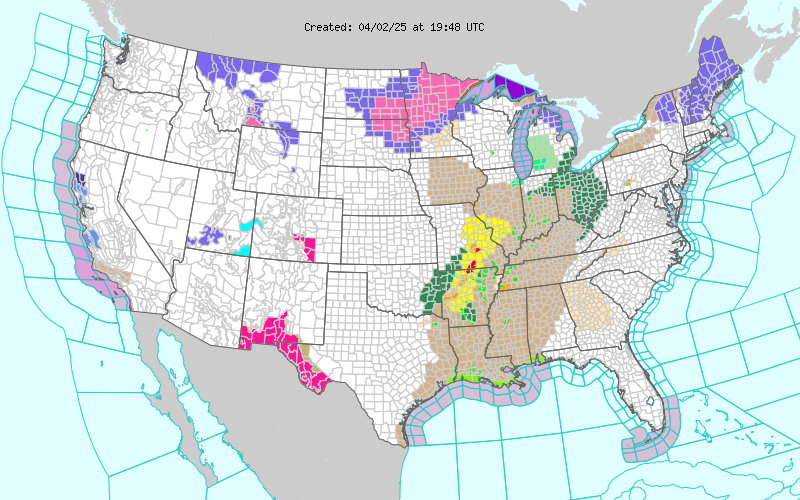
The image is a live image for the National Weather Service server. It gets updated on Real time.
Understanding the nuances of winter weather in the Central US is crucial. This region, known for its extreme variability, often sees rapid temperature swings and diverse precipitation types as different air masses battle for dominance. Today is a prime example of such a dynamic interplay, with a lingering cold air mass gradually giving way to milder Pacific air in some areas, while a more active system brings snow and rain to others.
Morning Chill Grips the Central Plains and Midwest
The dawn of December 9th brings a distinct chill across the entire Central Zone. Temperatures are universally cold, with many areas waking up to readings well below freezing. For those in the northern reaches, such as Fargo, North Dakota, the mercury will hover around a brisk 14°F under mostly cloudy skies. Minneapolis, Minnesota, and Milwaukee, Wisconsin, will also start their day in the low 20s, with Minneapolis seeing mostly cloudy conditions and Milwaukee experiencing a more persistent cloud cover accompanied by winds up to 15 mph. Chicago, Illinois, will also be bracing for a cold morning at 23°F, with a slight chance of snow and winds gusting up to 20 mph, making it feel even colder.
Further south, but still experiencing a significant morning chill, cities like Detroit, Michigan (18°F), Indianapolis, Indiana (24°F), and Louisville, Kentucky (28°F) will all begin under mostly cloudy or cloudy skies. Even in the typically milder areas of the Central Plains, such as Omaha, Nebraska (30°F), Des Moines, Iowa (27°F), and St. Louis, Missouri (33°F), residents will need to bundle up. These conditions underscore the robust nature of the cold air mass that has settled over the region overnight, setting the stage for a frosty start to the day. The brisk winds, particularly in the Great Lakes region, will contribute to low wind chill values, making outdoor activities uncomfortable without proper cold-weather gear.
Afternoon Outlook: Warming Up and Changing Skies
As the day progresses, a notable shift in weather patterns is anticipated across much of the Central Zone. While the northern tier will largely remain under the influence of colder air and active weather, the central and southern portions are set to experience a welcome warming trend and increasing sunshine. This divergence highlights the vast geographical expanse of our Central Zone and the varied meteorological forces at play.
In the southern and western parts of the zone, a dramatic warm-up is on the horizon. Wichita, Kansas, is forecast to reach an impressive 63°F by afternoon, bathed in full sunshine, a significant jump from its morning low of 34°F. Denver, Colorado, and Colorado Springs, Colorado, will also enjoy a substantial boost, with temperatures climbing to 59°F and 57°F respectively, under mostly sunny to partly sunny skies. Kansas City, Missouri, will see a pleasant afternoon high of 54°F, while St. Louis, Missouri, will reach 50°F, both with mostly sunny conditions. This rapid warming is indicative of a ridge of high pressure building, drawing in milder air from the west and southwest, effectively pushing back the colder air mass that dominated the morning.
However, the northern and eastern sections of the Central Zone will tell a different story. Minneapolis, Minnesota, will only reach 30°F, with snow likely throughout the afternoon, posing potential travel challenges. Fargo, North Dakota, despite a significant warm-up to 34°F, will likely contend with rain, indicating a transition from frozen to liquid precipitation. Sioux Falls, South Dakota, will see temperatures rise to 38°F, but with a slight chance of light rain and winds picking up to 20 mph. Chicago, Illinois, Milwaukee, Wisconsin, Detroit, Michigan, and Indianapolis, Indiana, will all remain on the colder side, with afternoon highs ranging from 32°F to 39°F, predominantly under cloudy or partly sunny skies, with Chicago still experiencing brisk winds.
Regional Breakdown: City-Specific Forecasts for December 9th
Let's take a closer look at what residents in various key cities across the Central Zone can expect throughout their day:
- Wichita, KS: A beautiful day ahead! Starting partly cloudy at 34°F in the morning with 7 mph winds, temperatures will soar to a mild 63°F by afternoon under sunny skies, with winds increasing to 14 mph.
- St. Louis, MO: A chilly start at 33°F with mostly cloudy skies and 8 mph winds. The afternoon brings a pleasant change, warming to 50°F and becoming mostly sunny with 12 mph winds.
- Sioux Falls, SD: Morning temperatures will be 27°F under mostly cloudy conditions and light 5 mph winds. By afternoon, it warms to 38°F, but expect breezy conditions with 20 mph winds and a slight chance of light rain.
- Omaha, NE: A cold morning at 30°F, mostly cloudy with light 3 mph winds. The afternoon will be much milder and brighter, reaching 47°F with mostly sunny skies and 9 mph winds.
- Minneapolis, MN: A consistently cold day. Morning brings 22°F and mostly cloudy skies with 5 mph winds. The afternoon will only reach 30°F, with snow expected and 10 mph winds.
- Milwaukee, WI: Cold and cloudy throughout. Starting at 22°F with 15 mph winds, remaining cloudy. Afternoon sees a slight rise to 32°F, still cloudy, with winds at 10 mph.
- Louisville, KY: A cold start at 28°F with mostly cloudy skies and light 1 mph winds. The afternoon warms up to 41°F, becoming mostly sunny with 12 mph winds.
- Kansas City, MO: Morning will be 35°F, partly cloudy with 7 mph winds. A significant warm-up to 54°F is expected by afternoon, with mostly sunny conditions and 13 mph winds.
- Indianapolis, IN: A cold and cloudy morning at 24°F with 8 mph winds. The afternoon sees temperatures rise to 39°F, becoming partly sunny with 12 mph winds.
- Fargo, ND: The coldest start in the zone at 14°F, mostly cloudy and calm. A dramatic afternoon warm-up to 34°F, but with rain likely and strong 22 mph winds.
- Detroit, MI: A very cold start at 18°F, mostly cloudy with 8 mph winds. The afternoon will warm to 34°F, remaining cloudy with 13 mph winds.
- Des Moines, IA: Morning temperatures at 27°F, partly cloudy with 5 mph winds. Afternoon warms to 36°F, with a chance of light rain and 14 mph winds.
- Denver, CO: A cool morning at 34°F, partly cloudy with 10 mph winds. A beautiful afternoon ahead, reaching 59°F and mostly sunny with 13 mph winds.
- Colorado Springs, CO: Starting mostly clear at 33°F with 10 mph winds. The afternoon will be pleasant, rising to 57°F and partly sunny with lighter 5 mph winds.
- Chicago, IL: A very cold and windy morning at 23°F, with a slight chance of snow and strong 20 mph winds. Afternoon warms to 34°F, remaining cloudy with 15 mph winds.
Understanding the Atmospheric Dynamics Behind the Forecast
The varied forecast for the Central Zone on December 9th is a classic example of early winter atmospheric dynamics over North America. A departing cold air mass, which brought frigid temperatures to much of the region, is slowly retreating eastward. Simultaneously, a mild, Pacific air mass is pushing inland from the west, bringing warmer temperatures and clearer skies to the Rocky Mountain states and western plains. The interaction zone between these two air masses is where we see the most complex weather. A low-pressure system developing along this boundary is responsible for the increasing chances of rain and snow in the northern portions of the zone, particularly across the Upper Midwest and Great Lakes region.
Historically, December in the Central US is characterized by significant variability. While averages suggest cold temperatures and increasing chances of snow, it's not uncommon to experience "warm spells" where temperatures can briefly climb well above seasonal norms, especially in the southern plains. These warm ups are often precursors to a return of colder air or the development of strong weather systems. The current pattern, with a sharp temperature gradient from north to south, is typical for this transitional period, reminding us of the constant tug-of-war between arctic and milder air masses that define winter in this part of the country. This dynamic also influences the extent of cloud cover, with persistent low clouds often forming in the colder, more stable air, while frontal boundaries can trigger more organized precipitation.
Potential Impacts: Agriculture, Travel, and Daily Life
These diverse weather conditions will have various implications across the Central Zone.
Agricultural Considerations
For the agricultural sector, the varying temperatures and precipitation are noteworthy. The cold mornings across the entire zone are typical for December, helping to harden winter wheat and other overwintering crops. The ground is likely frozen in many northern areas, which can protect root systems from extreme cold. However, the anticipated rain in areas like Fargo and Sioux Falls, while not immediately detrimental, could lead to icy conditions if temperatures drop again rapidly after the rain. For areas seeing significant afternoon warming, such as Kansas and Colorado, the mild temperatures are a brief respite, but farmers will be watching closely for any subsequent cold snaps that could stress emerging winter crops or affect livestock. Livestock producers, especially in the colder northern states, must ensure adequate shelter and feed to help animals cope with the cold and potential snow. The moisture, whether rain or snow, is generally beneficial for soil moisture profiles, which will be crucial for next spring's planting season.
Travel Advisories
Travelers in the Central Zone should exercise caution, particularly in the northern states. The snow expected in Minneapolis and the slight chance of light rain/snow in Chicago and Sioux Falls could lead to slick roads and reduced visibility. Even light precipitation can make driving hazardous when temperatures are near freezing. Strong winds, especially in Fargo (22 mph) and Sioux Falls (20 mph), could also make travel difficult for high-profile vehicles and contribute to blowing snow in areas where it has already fallen. For those in the southern and western parts of the zone enjoying the mild conditions, travel should be largely unimpeded, but always be aware of changing conditions, especially when crossing state lines into colder regions. Always check local road conditions before embarking on a journey.
Daily Life and Preparedness
For daily life, the key will be adapting to the rapid changes. Layering clothing is essential, especially for those venturing out in the morning across the entire zone. Even with afternoon warming, the air can remain crisp. Home heating systems will continue to be in heavy use, so ensure they are functioning efficiently. Be mindful of potential energy consumption spikes. Residents in areas expecting snow or rain should prepare for potential power outages, although none are specifically alerted for this forecast period. It's always wise to have an emergency kit ready, especially in winter. Consider bringing pets indoors or providing them with adequate shelter from the cold.
Essential Preparedness Tips for the Central US
Given the dynamic weather patterns, here are some essential tips to stay safe and comfortable:
- Dress in Layers: Mornings will be very cold, but afternoons can warm up significantly. Layers allow for easy adjustment to temperature changes.
- Vehicle Preparedness: Ensure your vehicle's tires are properly inflated and have good tread. Keep an emergency kit in your car with blankets, a flashlight, food, water, and a charged phone.
- Home Safety: Check your heating system and carbon monoxide detectors. Keep gutters clear to prevent ice dams. Insulate pipes that are exposed to cold.
- Monitor Forecasts: Weather conditions can change rapidly in the Central US. Stay updated with the latest local forecasts, especially if you plan to travel.
- Hydration and Nutrition: Cold weather can still lead to dehydration. Drink plenty of fluids and eat nutritious meals to help your body stay warm.
- Pet Care: Bring pets indoors during extreme cold or provide them with warm, dry shelter and access to unfrozen water.
- Shovel Ready: If you're in an area expecting snow, have your shovels and de-icing salt ready.
Looking Beyond: The Week Ahead
While December 9th presents a mixed bag of weather, the overall pattern suggests a continued battle between cold and mild air masses across the Central Zone. The mild conditions in the south are likely to be transient, with colder air expected to make a return in the coming days. The northern tier will likely remain susceptible to further rounds of wintry precipitation as systems track across the region. Residents should remain vigilant and continue to monitor updated forecasts as we move deeper into the winter season. The variability we see today is a strong indicator of the kind of dynamic weather we can anticipate throughout the rest of December, making preparedness and awareness key to navigating the season successfully.
This post is created using the public data provided by the National Weather Service. Please check the Original source for more information.

Comments
Post a Comment
Please leave a comment.