Southern Freeze Alert: Winter Grips the South with Snow & Cold
Southern Freeze Alert: Winter Grips the South with Snow & Chilling Winds
As winter truly settles in, the Southern Zone of the United States is bracing for a day of stark contrasts and significant temperature drops. From the mild, misty mornings of Florida to the biting cold and potential snow showers in Tennessee and Oklahoma, this region is experiencing a dynamic weather pattern that demands attention and preparedness. A powerful cold front is making its presence felt, ushering in frigid air from the north and clearing skies for many, but not before delivering some scattered precipitation. Understanding these shifts is crucial for residents, travelers, and agricultural communities alike.
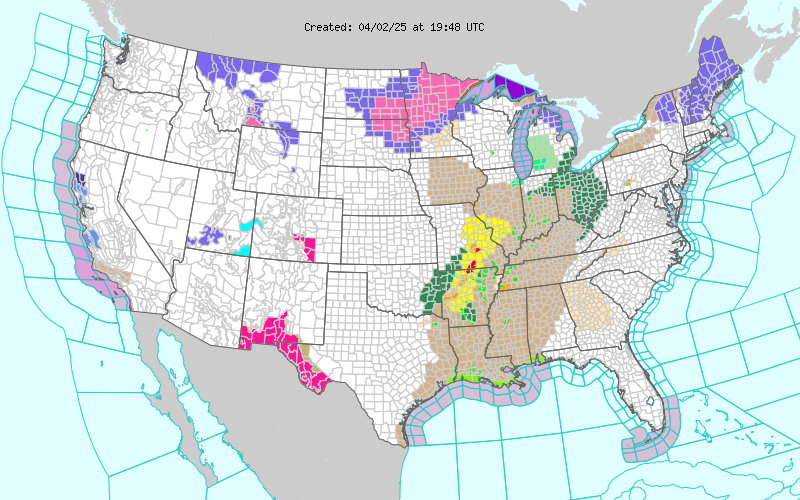
The image is a live image for the National Weather Service server. It gets updated on Real time.
Current Conditions Across the Southern Zone: A Morning Snapshot
This morning, the Southern Zone presents a diverse meteorological tapestry. In the southeastern reaches, particularly Florida, warmth and humidity persist, albeit with some atmospheric moisture. Tampa and Orlando are starting their day with patchy fog, indicating high humidity and calm conditions, with temperatures hovering in the low 60s Fahrenheit. Further south in Miami, the mercury is a balmy 72°F, but residents are already contending with a chance of rain showers, hinting at lingering tropical moisture.
Moving westward along the Gulf Coast, a different story unfolds. New Orleans is experiencing a chance of rain showers with temperatures around 59°F, while Baton Rouge and Houston are mostly cloudy, with temperatures in the low to mid-50s. These areas are feeling the initial push of the colder air, bringing unsettled conditions before the clearing.
The interior South, however, is already deep in winter's embrace. Birmingham, AL, and Atlanta, GA, are waking up to mostly sunny skies but with a significant chill, registering 33°F and 38°F respectively. What's notable here are the strong winds, gusting up to 20 mph, making it feel even colder. Jackson, MS, is partly sunny at 36°F, while Little Rock, AR, is sunny but frigid at 25°F. The most dramatic conditions are found in Nashville, TN, where temperatures have plummeted to a shocking 15°F with a 15 mph wind, bringing a chance of snow showers – a true winter blast for the region. Even further west, Oklahoma City, OK, is a frosty 19°F under sunny skies, and Dallas, TX, is at the freezing point of 32°F with mostly cloudy conditions.
On the southwestern edge of our zone, Albuquerque, NM, starts chilly at 31°F and sunny, but its mountainous terrain often provides a unique microclimate that can diverge from the broader Southern patterns.
Looking Ahead: The Evening and Overnight Forecast
As the day progresses and evening approaches, the Southern Zone will experience a widespread and significant drop in temperatures, particularly across the central and western portions. The cold front will continue its relentless march, sweeping away cloud cover and ushering in clear, but bitter, conditions.
For the Florida peninsula, temperatures will remain relatively mild compared to the rest of the zone. Tampa and Orlando will see temperatures rise slightly to 65°F, with mostly clear to partly cloudy skies. Miami will even warm further to 74°F, though a slight chance of showers and thunderstorms will persist, indicating continued moisture and instability in the deep tropics. Jacksonville will cool to 52°F but will become quite windy, with gusts up to 18 mph under clear skies.
The Deep South and Gulf Coast will experience a dramatic shift. New Orleans will drop sharply to 45°F with clear skies and increased winds of 15 mph. Baton Rouge and Houston will also clear out, cooling to 40°F and 47°F respectively. In the heart of the South, Birmingham will plunge to 24°F, and Atlanta to 27°F, both under clear skies and still breezy. Jackson, MS, will dip to 31°F, just below freezing. Nashville will remain in the deep freeze at 17°F, while Little Rock stays at 25°F. These are conditions that necessitate serious precautions against frost and freezing temperatures.
Further west, Dallas will see a slight warming to 38°F, but still chilly, under clear skies. Oklahoma City will warm to 29°F, remaining below freezing. Albuquerque will be an outlier, warming significantly to 47°F with partly cloudy skies, a welcome relief after a chilly start.
Regional Spotlights: What to Expect in Key Cities
Florida's Warmth and Moisture
Florida stands apart in this Southern weather narrative. While the rest of the region shivers, cities like Miami will maintain subtropical warmth, even seeing temperatures climb into the mid-70s. However, this warmth comes with a caveat: the chance of rain showers and even thunderstorms, particularly in Miami. Tampa and Orlando will contend with morning fog, a common occurrence when warm, moist air meets cooler surfaces, but will transition to mostly clear or partly cloudy evenings. Jacksonville, while cooler, will also enjoy clear skies but should prepare for strong evening winds, which could impact coastal activities and small craft.
The Deep South: A Chilly Transition
For cities like Birmingham, Atlanta, Jackson, and Little Rock, the day marks a definitive transition into winter's grip. Morning sunshine will give way to clear, frigid nights. The strong winds, especially in Birmingham and Atlanta, will contribute to dangerously low wind chill values, making outdoor exposure risky. Residents should be prepared for hard freezes, with temperatures well below freezing for extended periods. This is a critical time to ensure pipes are protected and heating systems are in good working order.
Texas and Oklahoma: Embrace the Winter Chill
The western edge of the Southern Zone, encompassing Dallas, Houston, and Oklahoma City, is experiencing some of the coldest air. Oklahoma City's morning at 19°F is particularly brutal. While Dallas starts cloudy and at freezing, it will clear up, but the cold will persist. Houston will also transition from cloudy to mostly clear, with temperatures dropping into the 40s. The cold air mass here is significant and will require residents to take all necessary winter precautions, especially for vulnerable populations and outdoor pets.
The Gulf Coast: From Clouds to Clear Skies
New Orleans and Baton Rouge will see a significant weather change. Starting with a chance of rain and mostly cloudy skies, the powerful cold front will sweep through, clearing out the moisture and dropping temperatures substantially. New Orleans, in particular, will see a 14-degree drop into the mid-40s with clear skies and increasing winds. This rapid change can be surprising for those accustomed to milder Gulf Coast winters, making proper layering and home heating essential.
The Southwest Edge: Albuquerque's Mild Outlook
Albuquerque, while starting chilly at 31°F, will experience a milder afternoon and evening compared to its eastern counterparts. Temperatures will rebound significantly into the upper 40s, with partly cloudy conditions. This often reflects the influence of high desert conditions and local topography, which can moderate extreme cold fronts that impact the central and eastern Southern states.
Agricultural Impact and Considerations
The widespread freezing temperatures across much of the Southern Zone pose significant challenges for the agricultural sector. In areas like Nashville, Little Rock, Jackson, Birmingham, Atlanta, Dallas, and Oklahoma City, temperatures dropping well below freezing, some into the teens, necessitate immediate action for farmers and growers.
- Winter Crops: For regions cultivating winter wheat or other hardy crops, the primary concern will be sustained freezing temperatures and potential ice accumulation, especially in areas with lingering moisture. While winter wheat is generally resilient, prolonged deep freezes can cause damage.
- Livestock: Farmers with livestock must ensure animals have adequate shelter, dry bedding, and access to unfrozen water. Increased feed rations may be necessary to help animals maintain body temperature in the extreme cold.
- Citrus and Tender Plants: Even in parts of Florida that escape the hardest freeze, such as northern Florida (Jacksonville), temperatures in the low 50s with strong winds can stress tender plants. Further north, any outdoor citrus or sensitive vegetation would require protection from frost.
- Pipes and Irrigation: Agricultural infrastructure, including irrigation systems and water pipes, is highly susceptible to freezing. Farmers should drain lines or insulate exposed pipes to prevent costly damage.
The severity of the cold front means that even a few degrees can make a difference between minor stress and significant crop loss. Vigilance and proactive measures are paramount during this period.
Travel Advisories and Road Conditions
Travel across the Southern Zone will be impacted by various weather phenomena. Motorists should exercise extreme caution and stay informed of local conditions.
- Fog: Morning patchy fog in Tampa and Orlando can significantly reduce visibility. Drivers should use low-beam headlights, maintain extra distance, and avoid sudden braking.
- Freezing Temperatures: Across the interior South, from Texas to Tennessee and Georgia, road surfaces could become slick, especially on bridges and overpasses, due to residual moisture freezing. Even without precipitation, black ice can form in shaded areas. Drive slowly and avoid cruise control.
- Strong Winds: High winds, particularly in Birmingham, Atlanta, and Jacksonville, can make driving difficult, especially for high-profile vehicles like trucks and RVs. Be prepared for sudden gusts and potential debris on roadways.
- Rain and Snow: While widespread precipitation isn't expected for most after the initial front passes, areas like New Orleans and Miami face morning rain chances, and Nashville has a chance of snow showers. These conditions can lead to reduced traction and visibility.
It is always advisable to check local Department of Transportation advisories before embarking on any significant travel, especially during such a dynamic weather event.
Essential Preparedness Tips for the Southern Winter
With such a significant cold snap gripping the region, preparedness is not just recommended, it's essential for safety and comfort.
- Stay Warm: Dress in layers, even indoors if your heating struggles to keep up. Ensure your home's heating system is serviced and functioning correctly. Use space heaters safely, keeping them away from flammable materials and never leaving them unattended.
- Protect Your Pipes: Disconnect garden hoses. Cover outdoor faucets. If temperatures are consistently below freezing, consider letting indoor faucets drip slowly to prevent pipes from freezing and bursting. Know where your main water shut-off valve is located.
- Check Your Vehicle: Ensure your car's anti-freeze is topped up. Check tire pressure, as cold weather can cause it to drop. Keep your gas tank at least half full to prevent fuel lines from freezing and to provide warmth if you get stranded. An emergency kit with blankets, food, water, and a charged phone is always a good idea.
- Care for Pets and Livestock: Bring pets indoors. If livestock must remain outside, ensure they have dry, sheltered areas and access to unfrozen water and extra feed.
- Mind Your Neighbors: Check on elderly or vulnerable neighbors who may need assistance staying warm or accessing supplies.
- Fire Safety: With increased use of heating, be extra vigilant about fire safety. Ensure smoke detectors and carbon monoxide detectors are working.
Understanding Southern Winter Weather Patterns
The weather patterns we are observing across the Southern Zone are typical for a robust winter season, characterized by the southward intrusion of cold, dry air masses from Canada. This event is likely driven by a strong high-pressure system building over the central U.S., which helps to funnel Arctic or polar air deep into the South. When this cold, dense air collides with the warmer, moister air lingering over the Gulf of Mexico and the Atlantic, it creates a powerful cold front.
The initial precipitation seen in New Orleans and Miami, and the snow potential in Nashville, are direct results of this interaction. As the cold air undercuts the warmer, moist air, it forces the moisture to rise, condense, and fall as rain or, where temperatures are low enough, snow. Once the front passes, the drier, colder air dominates, leading to the clear skies and sharp temperature drops observed in the evening forecasts. The strong winds are also a feature of these powerful frontal passages, as the pressure gradient between the high-pressure system to the north and lower pressure systems to the south intensifies.
These cold air outbreaks are vital components of the Southern climate, shaping everything from agricultural practices to seasonal energy demands. Understanding these large-scale atmospheric dynamics helps us appreciate the intricate dance of weather systems that define our regional seasons.
In conclusion, the Southern Zone is experiencing a significant winter weather event. While Florida enjoys relative warmth, the majority of the region is facing a serious cold snap, with freezing temperatures, strong winds, and the potential for snow. Staying informed, preparing adequately, and exercising caution will ensure everyone navigates this dynamic weather safely and comfortably. Always refer to local weather authorities for the most precise and up-to-date information for your specific area.
This post is created using the public data provided by the National Weather Service. Please check the Original source for more information.

Comments
Post a Comment
Please leave a comment.